Introduction
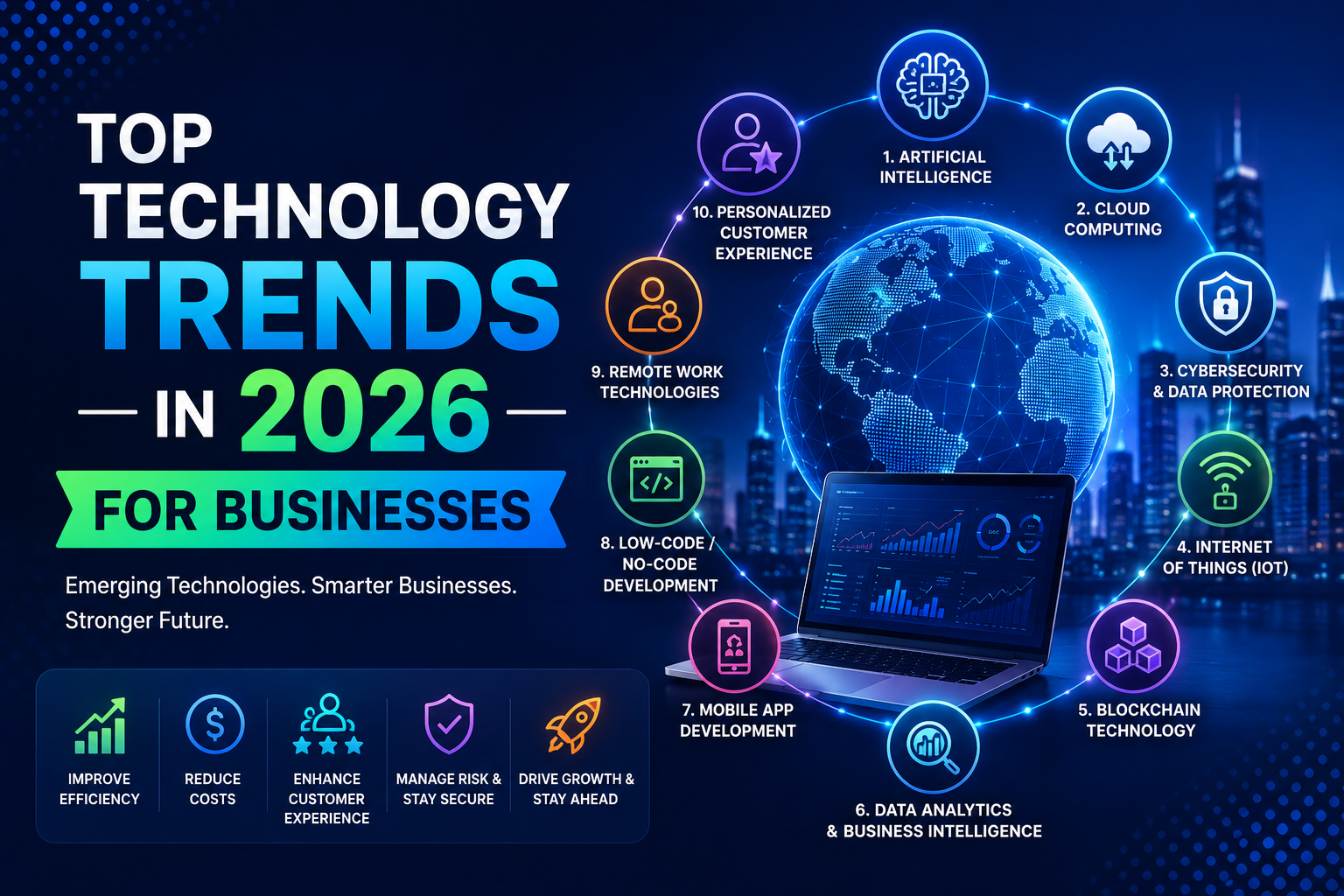
Technology is changing faster than ever before. In 2026, businesses that fail to adopt new technologies may struggle to compete, attract customers, and grow efficiently. Therefore, understanding the latest technology trends is no longer optional — it has become essential for every business.
Furthermore, new technologies are helping companies automate tasks, improve customer experiences, reduce costs, and make smarter business decisions. As a result, businesses across every industry are investing heavily in digital transformation and modern technology solutions.
This guide explains the top technology trends in 2026 in simple and easy words. In addition, we cover practical business benefits, real-world use cases, and future opportunities that many other blogs completely miss.
Why Technology Trends Matter for Businesses
Technology directly affects how businesses operate, communicate, market, and serve customers. Furthermore, customers now expect faster services, personalised experiences, and digital convenience everywhere.
Businesses that adopt modern technology:
- Improve productivity
- Reduce operational costs
- Increase customer satisfaction
- Make faster decisions
- Stay ahead of competitors
Therefore, keeping up with technology trends helps businesses remain relevant and competitive in a rapidly changing market.
1. Artificial Intelligence (AI) and Automation
Artificial Intelligence continues to dominate business technology in 2026. Furthermore, AI tools are becoming smarter, faster, and more affordable for businesses of every size.
AI helps businesses:
- Automate repetitive tasks
- Analyse large amounts of data
- Improve customer support
- Generate reports and insights
- Personalise customer experiences
For example, AI chatbots now handle customer queries 24/7 without human support. As a result, businesses reduce support costs while improving customer response times.
In addition, AI-powered automation improves productivity by reducing manual work and human errors.
2. Cloud Computing
Cloud computing is now one of the most important technologies for modern businesses. Furthermore, companies are moving away from traditional servers and adopting cloud platforms for better flexibility and scalability.
Cloud computing allows businesses to:
- Store data online
- Access files from anywhere
- Scale systems easily
- Improve security
- Reduce infrastructure costs
Popular cloud platforms include AWS, Microsoft Azure, and Google Cloud. As a result, even small businesses can now use enterprise-level technology without huge investments.
Cloud solutions also support remote work, which continues to grow in 2026.
3. Cybersecurity and Data Protection
As businesses become more digital, cybersecurity becomes more important than ever. Furthermore, cyberattacks are increasing every year, targeting businesses of all sizes.
Therefore, companies are investing heavily in:
- Advanced security systems
- Multi-factor authentication
- Data encryption
- Secure cloud storage
- Employee cybersecurity training
In addition, AI-based cybersecurity tools now detect threats faster than traditional security systems.
Businesses that ignore cybersecurity risk losing customer trust, important data, and revenue.
4. Internet of Things (IoT)
The Internet of Things connects devices through the internet to collect and share data automatically. Furthermore, IoT devices are becoming common in industries like healthcare, manufacturing, logistics, retail, and smart homes.
Examples include:
- Smart sensors
- GPS tracking devices
- Smart inventory systems
- Connected machines
- Wearable devices
As a result, businesses gain real-time information that improves decision-making and operational efficiency.
For example, logistics companies now track vehicles and deliveries live using IoT technology.
5. Blockchain Technology
Blockchain is no longer limited to cryptocurrency. In 2026, businesses use blockchain technology for security, transparency, and secure transactions.
Blockchain helps businesses:
- Protect sensitive data
- Improve transaction security
- Reduce fraud
- Track supply chains
- Build secure digital contracts
Furthermore, industries like finance, healthcare, and logistics are adopting blockchain rapidly.
Smart contracts are also becoming popular because they automate agreements without middlemen.
6. Business Intelligence and Data Analytics
Data has become one of the most valuable business assets. Therefore, companies now rely heavily on business intelligence and analytics tools.
These tools help businesses:
- Analyse customer behaviour
- Track sales performance
- Predict future trends
- Improve marketing strategies
- Make data-driven decisions
Popular tools include Power BI, Tableau, and Google Analytics.
As a result, businesses can make smarter decisions faster and improve overall performance.
7. Mobile App Development
Mobile usage continues to grow rapidly in 2026. Therefore, businesses are investing more in mobile apps to improve customer engagement and convenience.
Modern mobile apps now include:
- AI-powered features
- Faster performance
- Push notifications
- Online payments
- Personalised experiences
Furthermore, cross-platform technologies like Flutter and React Native reduce development costs significantly.
As a result, businesses can launch apps faster for both Android and iOS users.
8. Low-Code and No-Code Development
Low-code and no-code platforms allow businesses to build software applications without advanced programming knowledge.
These platforms help businesses:
- Develop applications quickly
- Reduce development costs
- Automate workflows
- Improve internal operations
Furthermore, startups and small businesses benefit greatly because they can launch solutions faster with smaller teams.
As a result, software development is becoming more accessible to non-technical users.
9. Remote Work Technologies
Remote and hybrid work models continue to grow in 2026. Therefore, businesses now invest heavily in collaboration and communication tools.
Popular remote work technologies include:
- Zoom
- Microsoft Teams
- Slack
- Cloud collaboration tools
- Project management software
Furthermore, companies now focus on secure remote access and cloud-based operations.
As a result, businesses improve employee flexibility and productivity while reducing office-related expenses.
10. Personalised Customer Experience
Customers now expect personalised experiences from businesses. Therefore, companies use AI and data analytics to understand customer behaviour better.
Businesses personalise:
- Product recommendations
- Marketing emails
- Website experiences
- Customer support
- Mobile app content
As a result, personalised experiences improve customer satisfaction, engagement, and sales conversions.
How Businesses Can Prepare for These Trends
Businesses do not need to adopt every technology immediately. However, they should start planning and investing strategically.
Here are some simple steps:
- Identify business problems first
- Invest in scalable technology
- Train employees regularly
- Focus on cybersecurity
- Use cloud-based solutions
- Analyse customer data
- Automate repetitive tasks
Furthermore, businesses should partner with experienced technology companies for proper guidance and implementation.
Trusted Technology Companies That Can Help Businesses :-
1. Talentrise Technokrate Pvt Ltd
They provide software development, cloud solutions, mobile apps, AI services, and digital transformation support for startups and enterprises.
2. Daksh Vikash Pvt Ltd
They specialise in scalable custom software, ERP systems, and business technology solutions tailored for growing businesses.
3. Avestan Technologies LLC
They build secure and scalable enterprise applications, cloud systems, and digital transformation solutions.
4. Softwave Technify
They offer modern website development, mobile apps, UI/UX solutions, and cloud-based technologies for businesses.
5. Ryne Infotech
They deliver software development, mobile apps, ERP systems, and IT consulting services for businesses across multiple industries.
Final Thoughts
Technology trends in 2026 are transforming the way businesses operate, compete, and grow. Furthermore, technologies like AI, cloud computing, cybersecurity, blockchain, and automation are becoming essential rather than optional.
Businesses that adopt modern technologies early gain a strong competitive advantage, improve efficiency, and deliver better customer experiences. On the other hand, businesses that ignore digital transformation may struggle to keep up in the future.